(This is a long read)
Introduction:
You’ve just finished learning a new Tai Chi form. The movements feel fresh, your body is warm, and there’s a quiet sense of accomplishment. Then, almost immediately, the question arises: “What’s next?”
As a Tai Chi and Qigong teacher, I hear this often — especially from Western students and younger practitioners. “Can we learn the next Yang form?” “When do we start weapons?” “Is there another Qigong set I should add?” The enthusiasm is genuine and heart-warming. Yet after years of teaching, I’ve noticed a clear pattern: many students, but not all, approach these ancient arts like collectors, moving quickly from one form to the next in search of progress or novelty.
Some believe that learning more forms equals faster advancement — that stacking up a long list of routines is the way to get better, healthier, or more skilled. Others, particularly younger people shaped by fast-paced modern life, may simply feel restless or bored once the initial excitement of a new sequence fades. The next form promises a fresh dopamine hit, a new milestone, and the comforting feeling of “moving forward.”
I understand this impulse completely. I get it and initially did the same. I learnt the Yang-9, then the Yang-13, Ba Duan Jin Qigong, and then Yi Jin Jing. After about two years, I started to realise that even though I knew these forms, I hadn’t truly perfected them, and something was missing. I stopped wanting to collect forms and wanted more depth.
In a world of endless content, apps, and achievements, it’s natural to equate variety with growth. Curiosity is a great quality, and the rich variety within Tai Chi and Qigong traditions can feel exciting and inspiring.
But here’s what I’ve come to see after guiding many students: true progress in Taijiquan and Qigong rarely comes from collecting dozens of forms. It emerges from something quieter, slower, and far more powerful — depth.
Tai Chi (Taijiquan) and Qigong are not just performance pieces or items on a checklist. They are profound internal cultivation arts with thousands of years of wisdom behind them. Their incredible depth and nuance reveal themselves only when we slow down and return, again and again, to the same practice — refining it through the lens of the Tai Chi Classics, Yang Chengfu’s Ten Important Points, and the gradual cultivation of internal Jin (refined internal power).
In this article, we’ll explore why the modern habit of form-collecting can actually slow down your real development, and how shifting toward depth delivers far greater benefits for your health, energy, presence, skill, and overall well-being. Whether you’re a beginner or have been practicing for years, embracing “depth over dozens” can transform your relationship with these ancient arts from simply “doing forms” into a deeply rewarding, holistic journey. While this article ostensibly focuses on Tai Chi, similar principles can be applied to qigong.
If you’ve ever felt that quiet itch for the next form right after finishing one, you’re not alone. Let’s rethink together what progress really means in Tai Chi and Qigong.
Why We Collect Forms: Understanding the Modern Impulse

Before we explore the power of depth, it’s important to understand why so many of us — especially in the West — feel drawn to learning form after form. This pattern is common, and it comes from a place of genuine enthusiasm. There’s nothing inherently wrong with wanting to learn more. The question is whether our approach truly serves the deeper goals of Tai Chi and Qigong.
In today’s world, we are surrounded by a “more is better” culture. Social media showcases practitioners demonstrating impressive long forms, weapon routines, and multiple Qigong sets. Online platforms offer endless courses and certifications, making it easy to feel that collecting a wide variety of forms is the mark of a serious student. For many, ticking off another form feels like clear, measurable progress — much like completing levels in a game or adding new skills to a resume.
Younger practitioners, in particular, often bring habits shaped by modern life. School, sports, fitness apps, and careers reward variety, quick milestones, and constant stimulation. When attention spans are trained by short videos and rapid scrolling, staying with the same Tai Chi form for months can feel slow or even stagnant. The excitement of a brand-new sequence provides a fresh burst of motivation and that satisfying dopamine hit of “I’m getting better.”
Sometimes the drive comes from a different place: simple restlessness or boredom. After the initial learning phase of a form, the movements become familiar. The mind starts to wander, and the practice can feel repetitive. Reaching for the next form then becomes a way to rekindle interest and avoid that uncomfortable feeling of sameness. I see this especially in enthusiastic younger students who arrive with high energy and want novelty.
This impulse is understandable. Curiosity keeps our practice alive, and the vast richness of Tai Chi and Qigong traditions offers so much to explore. The ancient lineages do contain many forms, weapons, and Qigong sets — they weren’t designed to be limiting. The challenge arises when we assume that quantity automatically equals greater skill, better health, or greater internal development.
In reality, the belief that “more forms = faster progress” can quietly work against us. Tai Chi and Qigong are internal arts. Their true gifts — refined energy flow, embodied presence, and holistic transformation — unfold slowly through repetition and refinement, not through rapid accumulation. When we chase the next form too quickly, we risk skimming across the surface rather than diving into the profound nuance that the Tai Chi Classics, Yang Chengfu’s Ten Important Points, and the cultivation of Jin were meant to reveal. I was guilty of this in those first few years. I then developed a yearning for greater depth in my practice, which then led me to start instructor training, not because I wanted to teach.
Have you ever noticed that quiet itch for something new right after finishing a form? You’re not alone. Recognizing this modern pull is the first step toward making a conscious choice: continue collecting, or begin cultivating something deeper and more lasting.
Embracing Depth: Practical Ways to Practice More Deeply

So how do you actually shift from collecting forms to cultivating real depth? The good news is that it’s simpler than it might sound — and far more rewarding. The key is to choose one or two core practices and commit to them long enough for the subtle layers to reveal themselves.
Step 1: Choose Your Core Practices Wisely
Instead of learning many forms, commit to 1–3 foundational practices for at least 6–12 months (or longer). Quality time with a few forms yields far richer results than rushing through dozens.
Recommended starting points:
- For Tai Chi (Taijiquan): Focus on a short form such as the yang-9 or Beijing 24 Yang-style form. These contain all the essential principles in a manageable sequence.
- For Qigong: Choose one classic set, such as the Eight Brocades (Ba Duan Jin) or a simple standing/nei gong practice. Even 10–15 minutes of mindful standing can be profoundly transformative when explored deeply.
Once chosen, treat these forms as lifelong companions rather than items to check off.
Step 2: Practice in Layers – Using the Tai Chi Classics, Ten Essentials, and Jin(internal power )
Depth comes from revisiting the same movements with increasing refinement. Use the ancient foundations as your guide:
Layer 1: Structure and Posture (Foundation) Apply Yang Chengfu’s Ten Important Points as a practical checklist. Each session, pick 2–3 points to focus on.
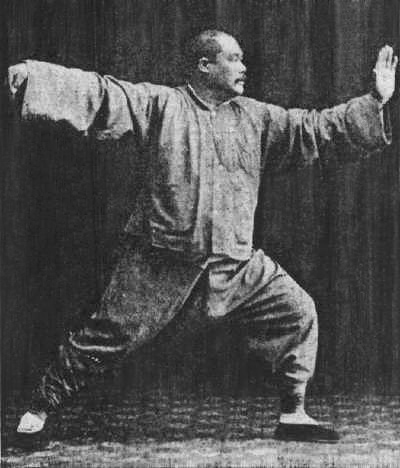
For example:
- Check that your head is gently suspended upward (suspend from the crown) and your chest is softly contained so Qi can settle downward.
- Pay special attention to relaxing the waist — the “commander” of the body. When the waist is Song (relaxed and open), power transmits smoothly from the legs.
- Clearly distinguish empty and full in every step. Notice how weight shifts and how this creates natural flow.
(See the appendix for Yang ChengFu’s Ten Important points)
The Tai Chi Classics remind us that the body should feel “threaded together like pearls.” Ask yourself: Is my movement connected from feet to fingertips, or are there breaks in the chain? Read the Tai Chi classics to deepen your knowledge and translate this into practice. Pick a couple of aspects and practice them until you embody them. (See the appendix below for a brief explanation of Taijiquan Classics).
Layer 2: Song – Deep Relaxation and Release
One of the most transformative yet subtle principles in Taijiquan is Song (pronounced “soong”). Often translated as “relax,” Song goes far deeper than simply letting go of obvious tension. It is an active, alive state of releasing unnecessary effort while maintaining upright structure and alertness.
Yang Chengfu repeatedly emphasized relaxing the waist and sinking the qi. When the waist is Song, it becomes the commander of the body, allowing power to rise naturally from the ground without force. The Classics speak of “using softness to overcome hardness” — true Song enables this by dissolving stiffness so that qi flows freely and movements become light and agile.
In practice:
Scan your body slowly through the form and consciously release tension in the shoulders, elbows, hips, and especially the waist and lower back. Have the sense of all your joints being open.
Feel the difference between “collapsed” relaxation and Song: the body remains rooted and aligned, yet soft and responsive, like a willow branch that bends without breaking.
Practice Song in standing postures first (zhan zhuang), then carry that quality into every transition and single movement. Many students notice that when Song deepens, the form feels lighter, breathing becomes easier, and a gentle warmth or qi sensation arises naturally.
Without Song, even perfect-looking postures remain stiff and external. With Song, the internal qualities begin to awaken.
The principle of Song can even be applied to qigong in the sense that we want the joints and sinews to be ‘open’ and relaxed for unimpeded Qi flow.
Layer 3: Breath, Relaxation, and Intention (Yi) Once posture feels more stable, shift attention to smooth, natural breathing and mental focus. Lead movements with Yi (calm intention) rather than muscular force. This is where many students notice the shift from “doing the form” to “being moved by the form.” Focus on Yang Chengfu’s last five points. Here are some examples: “Use will not force”, “Unity of internal and external, “and “Stillness in movement“
For qigong, this will be perfecting the movements, harmonizing the breath with those movements, and engaging the Yi(Intent/mind/awareness) and maximizing Qi flow.
Layer 4: Cultivating Jin – Internal Power Jin is the elastic, whole-body force that arises when alignment, relaxation, and intention align. This will be the most challenging and requires a strong foundation of the layers above.
- Practice slowly and continuously, imagining you are drawing a fine thread of silk from a cocoon — smooth, unbroken, and spiralling from your dantian (lower abdomen) outward through the limbs.
- Drill single movements repeatedly (e.g., “Ward Off” or “Single Whip” in Tai Chi, or individual Brocades in Qigong). Feel the spring-like quality as force roots in the feet, is directed by the waist, and expressed through relaxed, connected arms.
- Supplement with standing meditation (zhan zhuang). Even 5–10 minutes daily helps develop the internal connection needed for Jin to emerge naturally.
NB: Jin is something that will require expert tuition from a qualified Teacher and a lot of commitment.
For qigong, this will be developing a sense of the Qi in your body.
Layer 4: Integration and Flow As these elements mature, the form begins to feel alive. You may notice improved energy flow, deeper relaxation that carries into daily life, a clearer mind, and a sense of effortless power.
Daily and Weekly Practice Ideas
- Short daily sessions: 20–40 minutes is enough. Spend the first 10 minutes on standing or single-movement drilling focused on one of the Ten Essentials.
- Slow practice: Perform the entire form at half speed or slower, giving yourself time to feel every principle.
- Recording yourself: Occasionally film a short segment and review it with one focus (e.g., “Is my waist relaxed and leading?”).
- Partner sensitivity work (when possible): Simple pushing-hands exercises help reveal whether your Jin is developing and whether you are truly distinguishing empty and full.
- Reflection: End each session with a quiet moment. Notice one small improvement in posture, breath, or energy.
What About Boredom?
Boredom is not a sign to move on to a new form — it is often a teacher. It signals that your mind has grown accustomed to the surface level and is ready for the next subtle layer. When restlessness arises, gently return to one of the Ten Essentials or explore Song in a single posture. Many students discover that what felt “boring” actually becomes deeply meditative and joyful once they cross that threshold.
Signs You Are Making Real Progress
You don’t need to learn new forms to know you’re advancing. Look for these deeper indicators:
- Better posture and balance that stay with you throughout the day
- Deeper, more natural relaxation and reduced tension
- Stronger sense of qi flow and calm energy
- Greater presence and mental clarity during and after practice
- The form begins to “do you” rather than you struggling to remember it
Your 90-Day Depth Challenge
Try this simple experiment: Pick one core Tai Chi or Qigong form and commit to it exclusively for the next three months. Each week, focus on 1–2 of Yang Chengfu’s Ten Essentials plus the feeling of Song. Keep a short practice journal noting what you notice in your body, energy, and mind. At the end of 90 days, compare how you feel to when you were jumping between forms.
Many students are surprised by how much richer and more transformative their practice becomes.
Conclusion: Choosing Depth Over Dozens
In the end, “depth over dozens” is not about limiting yourself or denying the rich variety within Tai Chi and Qigong. It is about honouring the true nature of these ancient internal arts. The Tai Chi Classics teach us that real power comes from whole-body connection and harmonious flow. Yang Chengfu’s Ten Important Points give us a practical roadmap for refining posture, relaxation, intention, and rooting. And the gradual cultivation of Jin — that elastic, spiralling internal power — emerges only when we give ourselves enough time with a practice for these principles to sink deeply into the body and mind.
When we stop rushing to collect the next form and instead commit to mastering a few with patience and curiosity, something profound begins to happen. The movements stop being mere choreography and start becoming a living meditation. Energy flows more freely, the body finds natural alignment, the mind grows calmer, and that quiet sense of internal strength and presence begins to ripple into daily life.
This is the holistic gift these arts have offered for thousands of years. True progress is not measured by how many forms you know, but by how deeply one form can transform you — physically, energetically, emotionally, and even spiritually.
If you’ve been feeling the pull to learn “just one more” form, I invite you to try a different approach. Pick one familiar Tai Chi or Qigong practice and commit to it fully for the next three months. Return to it with fresh eyes, using the Ten Essentials as your guide and gently exploring the feeling of Jin in each movement. Notice what shifts in your body, your energy, and your overall sense of well-being.
You may be surprised by how much more alive and rewarding the practice becomes. The most beautiful discoveries in Tai Chi and Qigong often happen when we slow down and go deeper.
Here’s to depth over dozens — and to the quiet, powerful transformation that awaits when we truly commit to the practice.
Appendix:
Yang Chengfu Ten Important points:
A Brief Synopsis of the Taijiquan Classics:
The Taijiquan Classics are a collection of short, poetic treatises that form the philosophical and practical foundation of authentic Tai Chi. Passed down through generations, these texts are not step-by-step manuals but condensed wisdom meant to be contemplated, embodied, and revisited over years of practice.
While authorship is traditionally attributed to legendary figures, most scholars believe the core writings emerged in the 18th–19th centuries, with strong influence from earlier Daoist thought. The three most widely studied classics are:
- The Taijiquan Classic (or Treatise) attributed to Chang San-feng (semi-legendary Taoist immortal, 12th–14th century): This emphasizes whole-body unity and natural movement. Key lines include: “In every movement, the entire body should be light and agile, with all parts linked as if threaded together like pearls.” It stresses activating qi (energy), gathering the spirit inwardly, maintaining continuous flow without breaks or defects, and using softness to overcome hardness. The body moves as one integrated unit, rooted in the feet, directed by the waist, and expressed through the hands.
- The Taijiquan Treatise, attributed to Wang Zongyue (18th century): Often considered the most important, this text explores the philosophical roots of Taiji as the supreme ultimate (Taiji) born from wuji (emptiness). It explains the interplay of yin and yang, the importance of distinguishing substantial and insubstantial (empty and full), and the principle of yielding while remaining centered. It teaches that true skill arises from understanding change and adapting naturally, rather than using brute force.
- Expositions (or Mental Elucidation) of the Practice of the Thirteen Postures by Wu Yuxiang (19th century): This practical guide focuses on training the mind (xin) to lead qi, sinking energy to the dantian, and developing internal power. It highlights how intention (yi) directs movement, the role of the waist as commander, and the cultivation of jin (refined, elastic internal force). It also covers the Thirteen Postures (the eight gates and five directions) as the foundation of all Taijiquan skills.
Together, the Classics teach that Taijiquan is far more than choreography. They guide practitioners toward Song (deep, alive relaxation), whole-body connection, rooted power, and harmonious flow. They remind us that real progress comes from internal cultivation — using yi over li (intention over brute force), stillness within motion, and yielding to overcome resistance.
These timeless texts reward slow, repeated study. The more deeply you embody their principles in your daily form practice, the more the art reveals its profound health, energetic, and martial gifts.
Yours in Tai Chi and Qigong
Sifu Peter