The Heart-Mind in Qigong
We live in an age that prizes intelligence above almost everything. We optimize, analyse, and accumulate information at a pace no generation before us has known. Yet, for all this mental sharpening, many report feeling scattered, anxious, and disconnected.
This is not a contradiction; it is a clue. The problem is not a shortage of intelligence. We have forgotten how to bring that intelligence home, into the body, into feeling, into presence. In that sense, the heart-mind is a bridge between awareness and action.
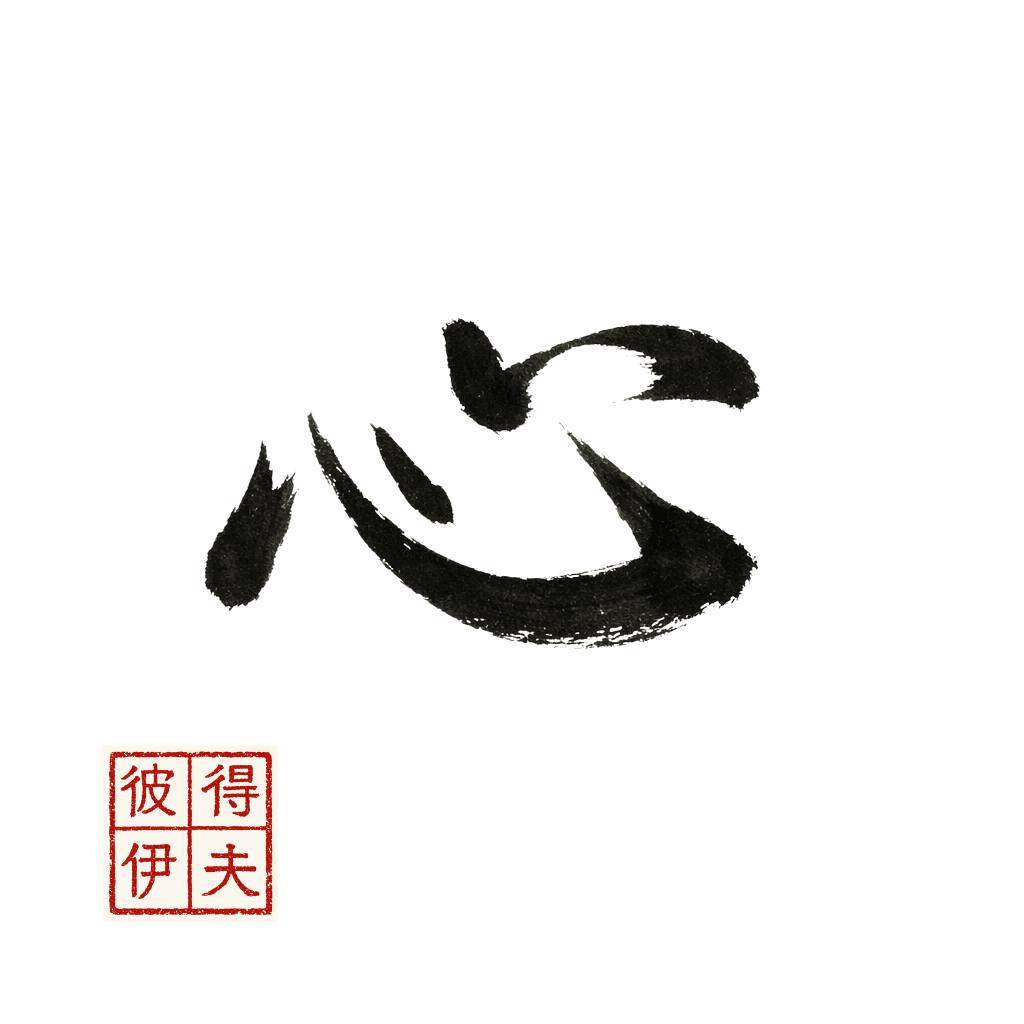
The ancient Chinese sages called this homecoming ‘Xin’, the Heart-Mind, in qigong, xin, heart-mind. It is one of the most beautiful and misunderstood concepts in Chinese philosophy. It sits at the center of Qigong practice.
In English, we separate ‘heart’ and ‘mind’ as though they were two organs. Classical Chinese thought made no such division. Xin refers to a single, unified faculty: the seat of consciousness where thought, feeling, intention, and awareness are one. To think clearly, in this view, is inseparable from feeling rightly. To feel deeply is itself a form of understanding.
This is not poetic flourish. It reflects a genuinely different model of the human being. One where intelligence arises through the whole organism: breath, blood, posture, sensation, and emotion all participating in knowing.
When the Heart-Mind is settled and whole, the old texts describe qualities we would recognize instantly: balance, compassion, clarity, a kind of natural wisdom that doesn’t strain or force. When it is fragmented, pulled apart by overthinking and suppressed emotion, confusion follows. A body treated as separate from awareness deepens disquiet.
Why Qigong Speaks Directly to This
Qigong is often introduced to newcomers as a set of gentle movements for health, and it certainly is that. But one of its deeper purposes is also cultivating Xin, training the Heart-Mind back into wholeness through the body rather than around it.
Consider what happens in a Qigong session. You slow the breath. You bring attention into the hands, the feet, the lower abdomen into sensation rather than commentary. You let the mind settle into the body instead of hovering above it, narrating and judging. This isn’t relaxation for its own sake. It is a direct ‘technology’ for closing the gap between thinking and feeling, between the analytical mind and the felt sense of being alive.
Practitioners often notice this shift in small, unmistakable ways. A tightness in the chest that has nothing to do with muscle. A held breath that eases without being told to. A thought that, instead of spiraling, simply passes through and dissolves. These are not incidental side effects; they are the Heart-Mind, gradually reassembling itself.
Integration, Not Escape
It’s worth being precise here, because “mind-body-spirit integration” has become something of a wellness cliché, often used to sell a fantasy of transcending the body or escaping ordinary life. That is not what the sages meant, and it is not what Qigong offers.
The Heart-Mind is not cultivated by leaving the world behind. It is cultivated by being more fully present within it, standing in Wuji with the weight settled through the feet, moving through the postures of a form with unhurried attention, feeling the breath fill the lower Dantian. Integration, in this tradition, means the mind stops treating the body as a machine to be managed and starts recognizing it as the very ground of awareness.
This has practical consequences. A settled Heart-Mind doesn’t just feel pleasant; it changes how a person meets difficulty. Reactivity softens. Compassion becomes less of an effort and more of a natural output of a nervous system that isn’t constantly bracing. Balance stops being a physical metaphor and becomes an actual, embodied capacity to stay upright literally and figuratively when life pushes.
A Simple Way In
You don’t need years of training to begin approaching this. A few minutes of quiet standing practice is enough to start noticing the gap between the thinking mind and the felt body and enough, over time, to start closing it.
Stand with the feet shoulder-width apart, knees soft, spine long but unforced. Let the arms hang or rest the hands gently over the lower abdomen. Rather than trying to think your way into calm, simply notice: the weight in the feet, the temperature of the air at the nostrils, the subtle rise and fall of the breath in the belly. When a thought arises, don’t fight it. Just let attention return, again, to sensation. This returning is the practice. It is the Heart-Mind being invited home.
This same approach can be applied to any of the Qigong forms you know well enough so that you aren’t preoccupied with getting the movements correct. Focus on or notice sensation within the body. But again, avoid getting into an analysis of the sensation, just observing it.
The Real Challenge of Our Time
The sages weren’t wrong, and their insight has only become more relevant. We do not need to become more intelligent. We need to let the intelligence we already have travel the short but often-avoided distance from head to heart, from analysis to embodiment, from knowing about life to actually inhabiting it.
Qigong is, at its root, a practice of that journey: patient, physical, unglamorous, and profoundly effective. Not a technique for acquiring something new, but a way of remembering something the body never actually forgot.
Yours in Qigong
Peter